Cat Enrichment at Home: Play, Puzzles, and Vertical Space
How do I create enrichment for my cat?
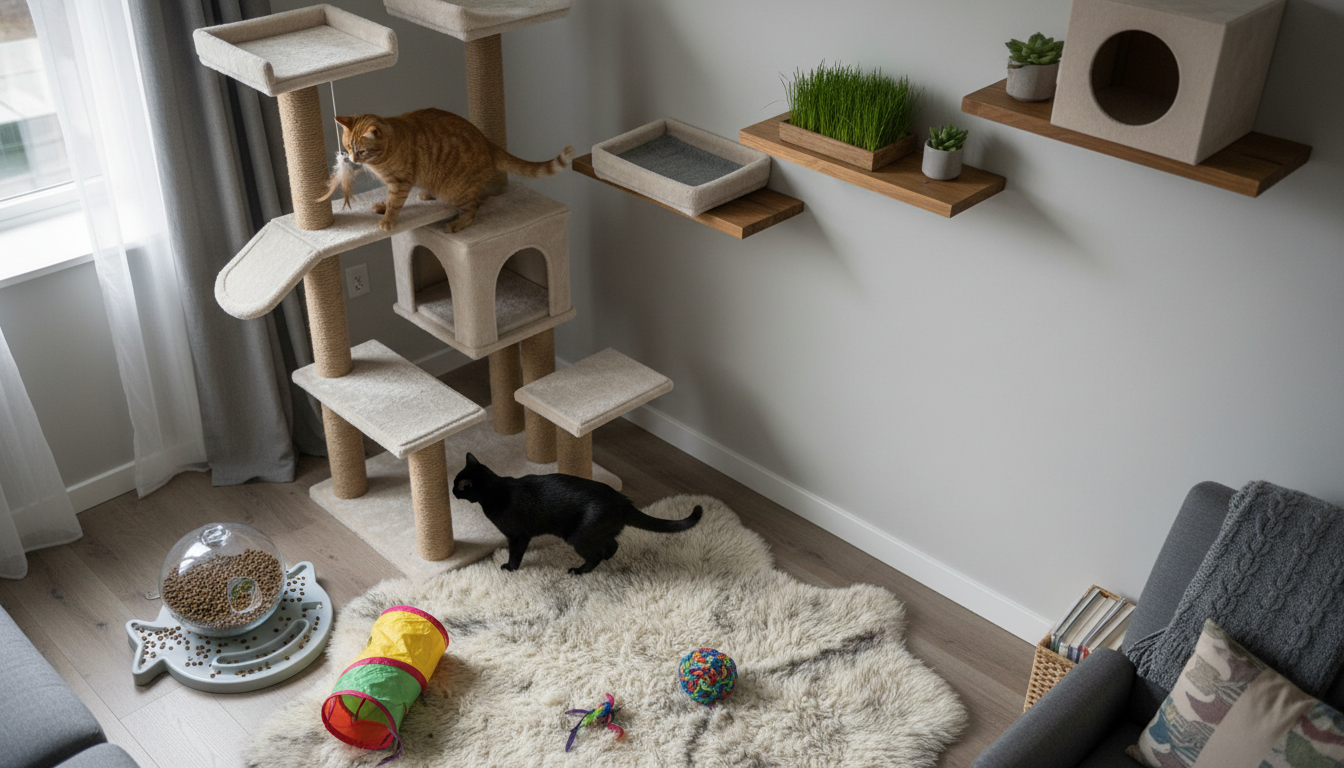
Cat enrichment means adding safe, interesting ways for your cat to hunt, climb, scratch, explore, and relax—without needing more space or complicated gear. The best setup mixes physical activity, mental challenges, and choice (places to go and things to do), then rotates items so they stay novel.
Start with “cat basics”: vertical space, scratching, and hiding
Most cats feel calmer and more engaged when they can move up high. Add a sturdy cat tree, window perch, or cleared shelf path. Provide at least one scratching option (vertical and/or horizontal) near sleeping areas and social spaces. Include a covered hideaway (a cat cube, a carrier left open, or a simple box) so your cat can retreat and reset.
Build daily hunting and puzzle routines
Turn meals into “work.” Use puzzle feeders, treat balls, or scatter kibble in a snuffle mat so your cat forages. For wet food, try a lick mat to slow eating and add a soothing activity. Keep sessions short at first and make success easy—then gradually increase challenge so your cat stays confident and curious.
Add interactive play that mimics prey
Use wand toys to copy real prey movement: hide behind furniture, dart out, then pause. Aim for two 5–10 minute play sessions per day, ending with a small snack to complete the hunt cycle. Rotate toys weekly and store extras out of sight so they regain “new toy” appeal.
Offer safe sensory enrichment
Give your cat a window view of birds or people, or play cat-friendly videos occasionally. Introduce scents like catnip or silvervine (if your cat enjoys them) and offer different textures to walk on or nap on. Supervise any new item, and avoid strings, ribbons, or small pieces your cat could swallow.
Keep it fresh with simple rotation
Instead of buying more, swap what’s available: one puzzle feeder this week, a different one next week; a new box “fort” every few days; a different perch location. Small changes can create big engagement.
For more ideas and product-friendly ways to set up your space, visit the full guide on cat enrichment.
FAQ
How often should I play with my cat each day?
Most cats do well with 1–3 short interactive play sessions daily, usually 5–15 minutes each. Adjust based on age and energy level, and stop before your cat gets overstimulated.











Leave a comment