Global Travel Etiquette Tips for Confident International Trips
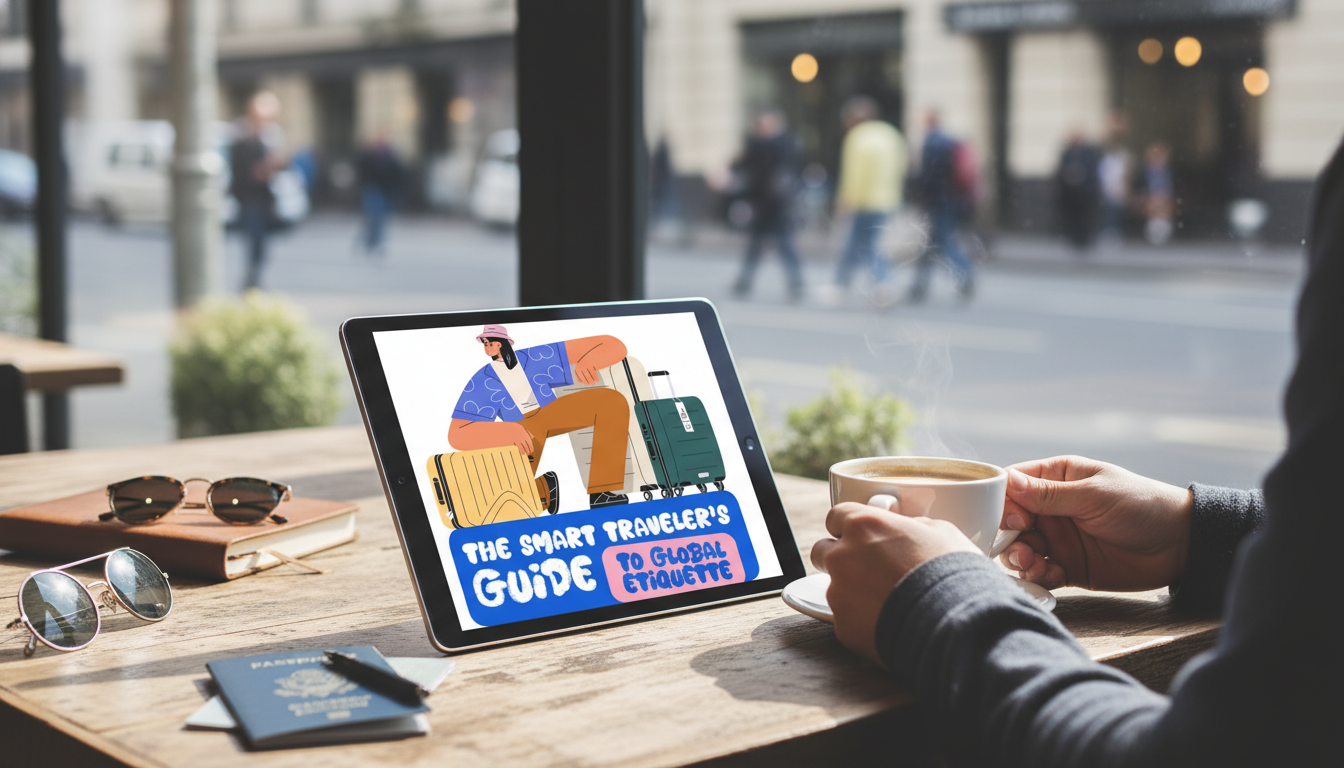
The Smart Traveler’s Guide to Global Etiquette: Cultural Tips for Confident International Travel
Good manners travel farther than any passport stamp. A practical etiquette reference helps avoid awkward moments, show respect quickly, and navigate everyday interactions—greetings, dining, dress, conversation, and gestures—across different cultures. This guide highlights the most common etiquette “pressure points” travelers face and how a digital etiquette handbook can help prepare for smoother, more respectful trips.
Why Global Etiquette Matters More Than Ever
International travel is more connected—and more visible—than it used to be. Small missteps can create outsized discomfort, especially when tone, personal space, timing, and gestures carry as much meaning as words. What feels “normal” in one city can read as rude just a few hours away.
Cultural norms also change by region, setting, and relationship. A relaxed café interaction may follow different rules than a family home, and business etiquette can be more formal than casual social life. Respect reduces friction with hosts, service staff, guides, and fellow travelers; it can also improve safety and access when you’re relying on local help.
Most importantly, etiquette isn’t about perfection. It’s about awareness, curiosity, and quick correction when needed—signals that you’re trying to meet people where they are.
Common Situations Where Etiquette Makes (or Breaks) the Moment
Even confident travelers run into a handful of repeat scenarios where cultural rules show up fast. A little preparation in these areas prevents the most common stumbles:
- Greetings and introductions: handshakes, bows, cheek kisses, titles, and when to use first names.
- Dining and drinking: seating order, utensil use, shared plates, toast etiquette, finishing food, and paying the bill.
- Dress and appearance: modesty norms, footwear rules, religious sites, and “smart casual” differences.
- Public behavior: voice volume, queueing, photography rules, PDA expectations, and personal space.
- Money and tipping: service charges, rounding customs, cash handling, and when tips are inappropriate.
Quick etiquette checkpoints by situation
| Situation | What to check before you go | Easy default if unsure |
|---|---|---|
| Greetings | Touch norms, titles, eye contact, gender expectations | Mirror the host; use a polite title; keep it brief |
| Meals | Seating, hands vs. utensils, sharing, toasts, pace | Wait for cues; eat at a moderate pace; accept small portions |
| Religious sites | Dress coverage, shoe removal, photo rules, silence | Dress modestly; ask before photos; follow posted signs |
| Gifts | When gifts are expected, wrapping colors, how to present/receive | Choose local or practical gifts; present with both hands if appropriate |
| Business settings | Cards, punctuality, meeting formality, follow-ups | Arrive early; keep language formal; let counterparts set the tone |
Polite Defaults That Work in Most Countries
When you’re unsure, a few “low-risk” behaviors tend to land well almost everywhere:
- Lead with courtesy: a calm greeting, a small smile, and a simple “please/thank you” in the local language.
- Observe before acting: watch how locals line up, address staff, and handle payment or seating.
- Ask permission: for photos, entering homes, touching items in markets, and discussing sensitive topics.
- Keep body language neutral: avoid big gestures, pointing at people, or touching someone’s head unless clearly acceptable.
- Choose modest and tidy attire when unsure: carry a light layer or scarf for unexpected dress codes.
If you want additional destination-specific guidance, check official travel advisories and local updates before you depart, such as the U.S. Department of State country information and the UK Foreign travel advice.
Gestures, Conversation, and Social Boundaries
Some of the fastest etiquette mistakes happen without a single word. Gestures vary widely: “OK” signs, thumbs-up, beckoning, and pointing can be rude in some places, even if your intention is friendly. When in doubt, keep hands relaxed, motions small, and avoid beckoning with one finger.
Using a Digital Etiquette Guide While Planning and While Traveling
Health requirements and local precautions can also shape respectful behavior (masking rules in clinics, spacing norms in queues, etc.). Before departure, review updates via CDC Travelers’ Health.
Product Spotlight: The Smart Traveler’s Guide to Global Etiquette (Digital Download eBook)
If you want a single, practical reference to reduce awkward moments abroad, The Smart Traveler’s Guide to Global Etiquette (digital download) is designed for quick look-ups during trip planning and while traveling. It’s especially handy for multi-country itineraries where the “rules” change after every border crossing.
At-a-glance details
| Item | Details |
|---|---|
| Format | Digital download eBook |
| Use case | Cultural tips, travel etiquette, international manners |
| Price | USD 43.99 |
| Availability | In stock |
To support calmer travel days overall—especially when jet lag and schedule changes make patience harder—pair etiquette prep with a simple wellness routine. Whole You: Holistic Wellness Guide (digital download) offers practical basics that can make it easier to show up rested, regulated, and ready to adapt.
For travelers who prefer a minimal, polished look that fits a range of dress expectations, a small accessory can help you look “put together” without overpacking—consider the Minimalist White Rhinestone Cross Pendant Necklace in 18K Gold as a simple option.
Practical Prep: A Respectful Travel Routine
FAQ
How can etiquette be handled when traveling to multiple countries on one trip?
Use a consistent checklist for greetings, dining, dress, tipping, and gestures, and review country-specific differences before each border crossing. When you’re unsure, default to polite, neutral behavior and follow local cues.
What are the most common etiquette mistakes travelers make?
Common issues include using gestures that are offensive locally, ignoring dress codes at religious sites, misreading tipping norms, speaking too loudly in quiet spaces, and taking photos without permission. A quick apology and an immediate adjustment is usually the most respectful fix.
Is a digital etiquette guide useful during travel, or only for planning?
It’s useful for both: planning helps you avoid predictable mistakes, while on-the-go look-ups help right before dinners, tours, sacred-site visits, or meetings. Saving key notes offline can also provide confidence when connectivity is limited.










Leave a comment