Safe Space Mapping: Build a Plan for Stress & Boundaries
Safe spaces and why they matter
A safe space is any environment—physical, social, or digital—where needs and boundaries are respected and where it’s easier to think clearly, regulate emotions, and recover from stress. For some people, that looks like quiet and privacy; for others, it’s a dependable routine or a specific person who listens without escalating the situation.
Safety has two layers. External safety is about low threat and predictability: clear rules, respectful behavior, and the ability to leave without consequences. Internal safety is the felt sense that you have agency—your “no” is honored, your body can settle, and you can trust your own judgment. When both layers are present, the nervous system has a better chance to downshift, which supports better decision-making under pressure. The American Psychological Association notes that stress affects the body in measurable ways, including muscle tension and changes in sleep and digestion—signals that can show up quickly when safety feels uncertain (APA: Stress effects on the body).
Safe spaces also aren’t “comfort at all costs.” Honest feedback, accountability, and difficult conversations can still be part of a safe environment when they’re handled with respect, consent, and repair. In teams and classrooms, the idea of psychological safety is closely tied to whether people can speak up, ask questions, and admit mistakes without being punished (Harvard Business Review: Psychological Safety).
Mapping matters because stress narrows attention and memory. When you’re activated, it’s harder to remember what helps, harder to weigh options, and easier to default to habits that may not serve you. A pre-made map reduces guesswork and supports follow-through—helping with prevention (reducing exposure to triggers), response (what to do when activated), and repair (how to return to baseline after conflict or overload).
What safe space mapping looks like
A safe space map is a personalized inventory plus an action plan: what helps, what harms, and what to do next. Some people create one map for everyday life and another for a specific context—workday stress, family conflict, online overwhelm, travel, or dating. The best maps are short, practical, and easy to access (a phone note, a printed page, or a simple workbook).
Most maps include: supportive people, regulating activities, calming environments, warning signs, boundaries, and escalation steps. Mapping can be done solo for self-support, or collaboratively in families, teams, classrooms, or friend groups to set shared expectations and reduce confusion.
Types of safe spaces and how to recognize them
| Type | Common signals of safety | Examples | How to use in a plan |
|---|---|---|---|
| Physical | Lowered tension, easier breathing, fewer sudden demands, predictable rules | A quiet room, a library corner, a parked car, a walking route | Choose a “default” spot; pre-pack essentials (water, headphones); plan exit routes |
| Relational | Respectful listening, consent, repair after conflict, non-judgment | A trusted friend, mentor, support group, counselor | Create a short reach-out script; define what support looks like (listen vs. advise) |
| Digital | Control over content, privacy, limited harassment, curated feeds | Muted notifications, private group chats, moderated communities | Set filter rules; schedule check-ins; create a shutdown routine after heavy content |
| Routine-based | Predictability, grounding cues, sense of agency | Morning stretch, tea ritual, journaling, playlist | Make it small and repeatable; attach it to an existing habit |
| Resource-based | Access to help and options, clearer next steps | Crisis lines, HR resources, campus services, safety apps | Store contacts; list when to use; practice one dry run |
Core building blocks of a strong map
A step-by-step method to map safe spaces
Step 1 — Pick a scenario
Step 2 — Identify baseline needs
Step 3 — List safe anchors
Step 4 — Name early warning signs
Step 5 — Create an escalation ladder
Define what to do at mild, moderate, and severe activation: micro-break → change environment → contact support → access professional help. If you’ve experienced traumatic events, having predetermined next steps can reduce panic and shorten recovery time (NIMH: Coping with traumatic events).
Step 6 — Add boundaries and scripts
Step 7 — Make it accessible
Step 8 — Review and update monthly
Using a safe space map in everyday situations
Digital safety, privacy, and boundaries
Getting the most from supportive digital downloads
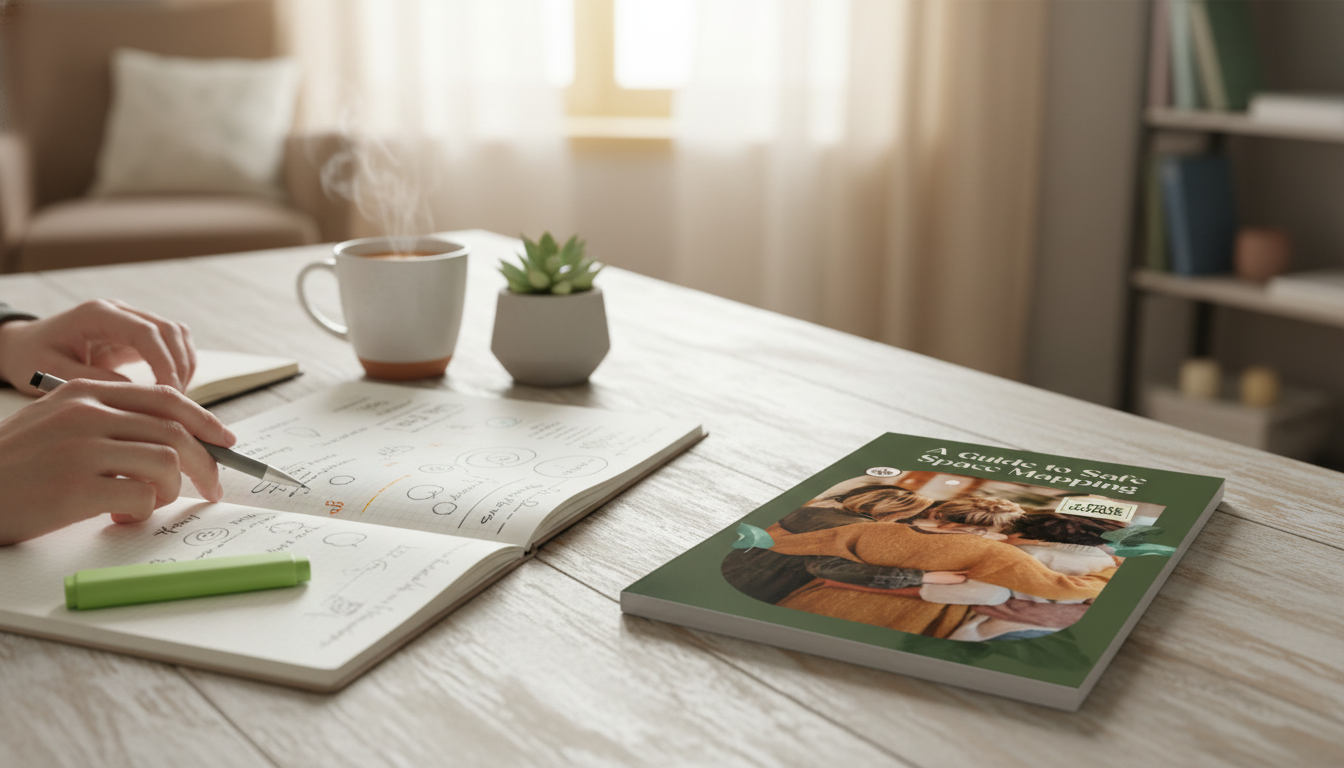
If you prefer structure, a guided workbook can make mapping feel simpler than starting from a blank page. A Guide to Safe Space Mapping (digital ebook) can be used one small section at a time—anchors today, boundaries tomorrow—so the process stays manageable.
Many people benefit from creating multiple maps: one for daily maintenance, one for conflict, and one for travel or unfamiliar environments. Pair mapping with gentle tracking (what works fastest, what lasts longest, what prevents escalation) and keep a one-page “portable” summary. For broader self-care habits that support emotional regulation—sleep, movement, nutrition, and routines—Whole You: Holistic Wellness Guide (digital download) can help you build steadier baseline support.
Some people also like having a small, personal grounding item as part of their “access tools” list—something tactile that signals safety and intention. If that fits your style, a simple accessory like the Minimalist White Rhinestone Cross Pendant Necklace in 18K Gold can be assigned a specific purpose (for example, “touch pendant, take three slow breaths, then read the next step on my ladder”).
FAQ
Is a safe space the same as avoiding discomfort?
No. A safe space can still include challenge, feedback, and growth—what makes it “safe” is respect, consent, and a path to repair, not the absence of difficult feelings.
How can safe space mapping help during anxiety or overwhelm?
When anxiety spikes, decision-making gets harder and options feel narrower. A pre-made ladder of actions (mild/moderate/severe) gives you fast next steps, reduces decision fatigue, and helps you interrupt escalation earlier.
Can safe spaces include online communities and digital routines?
Yes. Moderated communities, privacy settings, curated feeds, and a consistent shutdown routine after heavy content can all function as digital safe spaces when they reduce stimulation and protect boundaries.











Leave a comment